

Pallet Racking System Installation Contractors need Specialist HSE Support.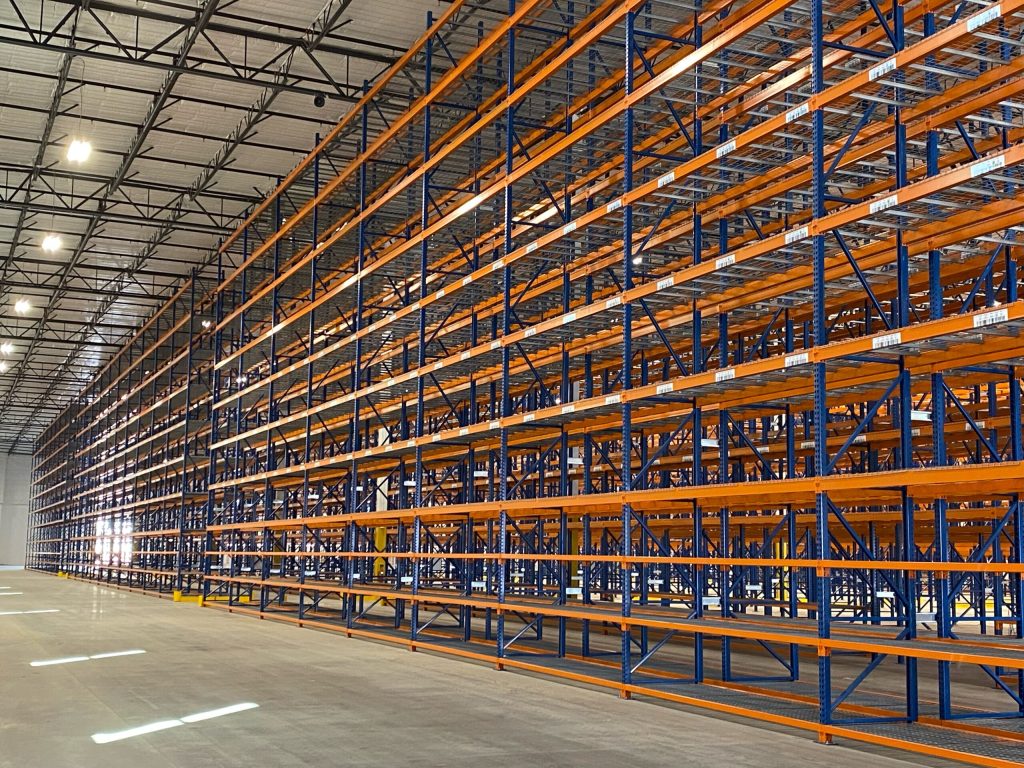
Pallet racking installation combines heavy manual handling, sustained work at height, and a structural stability responsibility that continues long after installation is complete, since a racking system that is safe on completion depends entirely on correct assembly, anchoring, and ongoing inspection. Much of this work also takes place inside live, operational warehouses, requiring careful coordination with forklift traffic and existing stock rather than the relative isolation of a typical construction site. Business Management Systems Limited provides health and safety consultancy built specifically around the realities of pallet racking system installation across all major commercial applications.
Why Pallet Racking Installers Need Specialist Support
Pallet racking installation spans selective and adjustable racking, drive-in and drive-through systems, push-back and pallet flow gravity racking, cantilever racking for long or awkward loads, narrow aisle and mobile shuttle racking, high-bay systems reaching well beyond typical warehouse eaves height, and racking-supported mezzanine floors. Each of these systems carries a distinct combination of structural, access, and manual handling risks. A generic risk assessment cannot properly address the difference between installing a low-level selective racking run in a small unit and erecting a high-bay narrow aisle system requiring specialist access equipment and a phased structural sequence. Our consultancy produces documentation matched to the specific racking system, height, and warehouse environment involved.
Manual Handling of Racking Components
Racking uprights, beams, and bracing components are heavy, long, and often awkward to manoeuvre, particularly during positioning and connection at height where components must be lifted and aligned precisely. We produce practical manual handling risk assessments in line with the Manual Handling Operations Regulations 1992, addressing safe lifting technique, team handling requirements for longer or heavier components, and the coordinated use of forklifts or other mechanical handling equipment to position components safely rather than relying on manual lifting alone.
Working at Height During Assembly
Pallet racking installation is carried out at height for all but the lowest level of a run, with high-bay and narrow aisle systems in particular requiring sustained work many metres above floor level. We help clients comply with the Work at Height Regulations 2005, producing risk assessments and safe systems of work matched to the specific access method involved, including mobile elevating work platforms, scaffold towers, or purpose-designed racking installation platforms, and clear guidance on selecting the appropriate access method for the height and duration of work rather than defaulting to whatever equipment happens to be available on site.
Structural Stability During Installation
A racking run is not structurally stable until bracing, anchoring, and connections are fully complete, and racking that appears assembled can still present a genuine collapse risk if worked on, loaded, or disturbed before installation is finished. We help clients develop safe systems of work that address correct installation sequencing, temporary stability arrangements during multi-day installations, and clear procedures ensuring that no section of racking is loaded or handed over to warehouse operations until it has been fully completed, anchored, and, where required, inspected.
Compliance with SEMA and Racking Design Standards
Pallet racking design and installation in the United Kingdom is governed by guidance from the Storage Equipment Manufacturers’ Association and relevant standards including BS EN 15512, covering structural design, installation tolerances, and safe working load specification. We help clients build compliance verification into their installation process, ensuring racking is installed strictly in accordance with the approved design, that installation tolerances specified by the manufacturer or designer are respected, and that any site-specific variation from the original design is properly reviewed and approved before installation proceeds.
Anchoring, Floor Fixing and Dust Control
Racking is fixed to the warehouse floor using expansion or chemical anchors, requiring drilling into concrete that generates both noise and, where the substrate contains silica, respirable crystalline silica dust. We help clients develop safe systems of work for anchor drilling under the Control of Substances Hazardous to Health Regulations 2002, including dust extraction on drilling equipment where practicable, appropriate respiratory protective equipment, and correct anchor installation procedures to ensure the structural fixing performs as designed, since an incorrectly installed anchor undermines the stability of the entire racking system regardless of how well the steelwork above has been assembled.
Working Within Live Warehouse Operations
A significant proportion of pallet racking installation takes place within operational warehouses that continue to run forklift traffic, goods movement, and staff activity around the installation area, presenting a serious interface risk between installation teams and warehouse operations. We help clients develop robust segregation arrangements, including physical barriers or exclusion zones around active installation areas, clear communication protocols with warehouse management regarding programme and access, and specific procedures addressing the particular risk of forklift movement near installation teams working at height or handling long components at ground level.
Mezzanine Floor Installation
Racking-supported mezzanine floors introduce additional structural steel erection risks beyond standard racking installation, including crane-assisted lifting of larger structural elements, temporary stability during erection before decking and edge protection are complete, and the coordination of multiple trades where mezzanine installation forms part of a wider warehouse fit-out. We help clients develop safe systems of work that address lifting plan coordination, correct sequencing of edge protection installation, and clear responsibility for temporary works design where the mezzanine structure requires specific engineering input during construction.
Overhead Hazards and Falling Objects
Assembly work at height on racking structures presents a risk of dropped tools, components, or fixings falling onto personnel working below, particularly where installation teams are working at multiple levels simultaneously or where warehouse operations continue nearby. We help clients develop safe systems of work that address tool tethering, exclusion zones beneath active installation work, and clear procedures for managing overhead risk where installation and warehouse activity cannot be fully separated.
Handover, Inspection and the Person Responsible for Racking Safety
On completion, a racking system should be handed over with clear documentation confirming it has been installed in accordance with the approved design and inspected before being brought into use, supporting the client’s ongoing duty to appoint a person responsible for racking safety and maintain a programme of periodic expert inspection. We help clients develop clear handover documentation and completion certification, ensuring the client understands their ongoing inspection obligations and has the information needed to maintain the racking system safely once installation is complete.
Fire Safety and Layout Compliance
Racking layout, including aisle widths and clearance beneath sprinkler heads, has direct implications for a warehouse’s fire strategy, and installation that does not match the approved fire engineering design can compromise sprinkler coverage or escape route provision. We help clients ensure racking is installed to the dimensions and clearances specified in the approved design, with any site-driven variation properly reviewed against the building’s fire strategy before proceeding.
Working Within CDM Frameworks
Pallet racking installation contractors working on new build warehouse projects or major fit-out works fall within the scope of the Construction (Design and Management) Regulations 2015. We help clients understand their duties under CDM 2015, prepare risk assessments and method statements to the standard expected by principal contractors, and ensure installation teams working within live operational warehouses are properly inducted into site-specific rules where the warehouse operator, rather than a principal contractor, retains overall control of the premises.
Supporting Your ISO Management System
For pallet racking installation businesses working towards or maintaining SSIP, ISO 45001, ISO 9001, or ISO 14001 certification, we provide full supporting consultancy, from gap analysis and documentation development through to internal audit and management review support, ensuring your management system genuinely reflects the structural, height, and warehouse coordination demands of your work.
Working With BMS
Business Management Systems Limited is a UKAS-accredited ISO management system consultancy with a clear understanding of the structural, mechanical, and coordination demands placed on pallet racking installation contractors, from standard selective racking to high-bay systems, mezzanine floors, and installation within live operational warehouses. We produce documentation your teams will genuinely use on site, built around the realities of a trade where safe completion depends on precision, correct sequencing, and effective coordination with an active working environment.
If your pallet racking installation business would benefit from health and safety consultancy grounded in the realities of the trade, contact Business Management Systems Limited to discuss how we can support your team.