

Suspended Ceiling Contractors need Specialist HSE Support.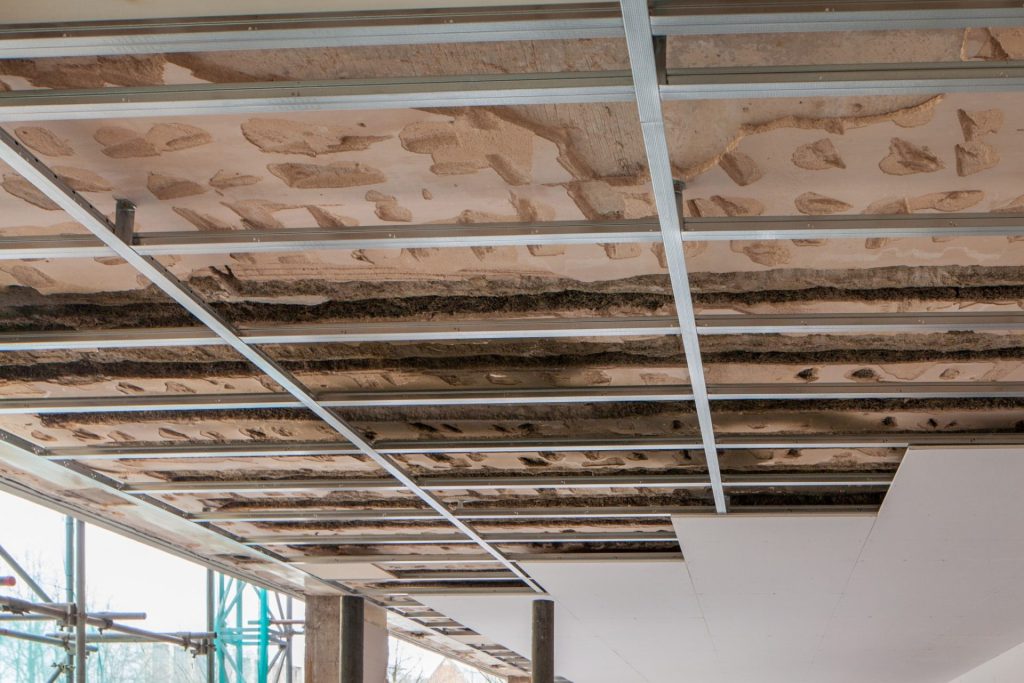
Suspended ceiling installation is often viewed as a lower-risk trade compared to structural or heavy construction work, yet it carries a distinct combination of hazards that deserve proper attention: sustained work at height on podium steps and tower scaffolds, manual handling of grid and tile materials overhead, exposure to mineral fibre dust, and frequent work in close proximity to existing services and, in older buildings, legacy asbestos-containing materials. Business Management Systems Limited provides health and safety consultancy built specifically around the realities of suspended ceiling installation.
Why Suspended Ceiling Contractors Need Specialist Support
Suspended ceiling work spans mineral fibre tile and grid systems, plasterboard and metal furring ceilings, acoustic and specialist rafts, and fire-rated systems in commercial, retail, healthcare, and education environments. Much of this work takes place above occupied or soon-to-be-occupied space, often in coordination with mechanical, electrical, and fire protection trades whose services sit within the ceiling void. A generic risk assessment cannot properly address the difference between installing a standard mineral fibre grid ceiling in an empty office and fitting a fire-rated plasterboard ceiling around live sprinkler pipework in an occupied hospital corridor. Our consultancy produces documentation matched to the specific ceiling system, working environment, and coordination requirements involved.
Working at Height on Podium Steps and Tower Scaffolds
Suspended ceiling installation is carried out almost entirely at height, typically from podium steps, tower scaffolds, or mobile elevating work platforms, with work often sustained for long periods rather than involving brief access. We help clients comply with the Work at Height Regulations 2005, producing risk assessments and safe systems of work for the selection and safe use of podium steps and towers, including correct assembly, inspection, and stability checks, and clear guidance on when a tower scaffold rather than steps is the appropriate choice for the task and duration involved.
Manual Handling of Grid and Tile Materials
Ceiling grid sections, hangers, and tiles must be repeatedly lifted overhead throughout an installation, often while the operative is also positioned on a podium step or tower platform. This combination of overhead reaching and repetitive lifting presents a genuine musculoskeletal risk that is frequently underestimated because individual components are lightweight. We produce practical manual handling risk assessments in line with the Manual Handling Operations Regulations 1992, addressing safe working postures, material staging at height to reduce repeated ground-to-height transfers, and mechanical handling aids for heavier plasterboard and specialist ceiling panels.
Mineral Fibre Dust and Respiratory Protection
Cutting mineral fibre ceiling tiles generates dust that can cause skin and respiratory irritation, and cutting plasterboard and MF ceiling components generates fine dust with its own inhalation risks. We help clients develop safe systems of work under the Control of Substances Hazardous to Health Regulations 2002, including on-tool extraction where practicable, appropriate respiratory protective equipment, and controls for cutting operations carried out in occupied buildings where dust and noise affect building users as well as the installation team.
Asbestos Awareness in Refurbishment Work
Refurbishment and ceiling replacement projects in older buildings frequently expose contractors to legacy asbestos-containing materials, including certain older ceiling tile products, sprayed coatings above suspended ceilings, and insulation on services within the ceiling void. We support clients in developing asbestos awareness training and safe systems of work aligned with the Control of Asbestos Regulations 2012, with clear procedures for identifying and safely working around, rather than disturbing, suspect materials encountered during survey or strip-out work.
Working Around Existing Services
Suspended ceiling installation almost always involves working in and around existing mechanical, electrical, fire protection, and data services within the ceiling void, from live lighting circuits and fire alarm cabling to sprinkler pipework and ductwork. We help clients develop safe systems of work that address safe working near these services, including coordination and permit arrangements with other trades, and clear procedures for stopping work and reporting where unexpected or unidentified services are encountered.
Fire-Rated Ceiling Systems and Compliance
Fire-rated suspended ceiling systems play a critical role in a building’s overall fire strategy, and incorrect installation can compromise fire compartmentation without this being visible on completion. We help clients understand the correct installation requirements for fire-rated systems in line with manufacturer specifications and relevant Building Regulations, and build quality assurance checks into the installation process to ensure fire performance is not inadvertently undermined by service penetrations or incorrect detailing.
Noise in Occupied Environments
Cutting and fixing operations generate noise that, while not always at levels requiring hearing protection for the operative, can significantly disrupt building occupants in live environments such as offices, schools, and healthcare settings. We help clients plan noisy operations around occupancy patterns and develop communication protocols with the client to manage disruption, alongside standard noise exposure assessment for operatives in line with the Control of Noise at Work Regulations 2005 where sustained cutting operations are involved.
Working in Occupied Premises
A significant proportion of suspended ceiling work takes place in occupied or partially occupied buildings, requiring careful management of public and staff interface, containment of dust and debris, and safe pedestrian routes beneath active work areas. We help clients develop safe systems of work that address phased working, temporary barriers, and clear protocols for managing overhead work above spaces that remain in use.
Working Within CDM Frameworks
Suspended ceiling contractors typically work as subcontractors within wider fit-out, refurbishment, and construction projects, bringing them within the scope of the Construction (Design and Management) Regulations 2015. We help clients understand their duties under CDM 2015, prepare construction phase documentation where required, and produce risk assessments and method statements to the standard expected by principal contractors across commercial, retail, healthcare, and education sectors.
Supporting Your ISO Management System
For suspended ceiling businesses working towards or maintaining SSIP, ISO 45001, ISO 9001, or ISO 14001 certification, we provide full supporting consultancy, from gap analysis and documentation development through to internal audit and management review support, ensuring your management system genuinely reflects how your teams work at height and around live services on a daily basis.
Working With BMS
Business Management Systems Limited is a UKAS-accredited ISO management system consultancy with a clear understanding of the risks inherent in suspended ceiling installation. We produce documentation your teams will genuinely use on site, built around the realities of sustained work at height, service coordination, and installation in occupied buildings.
If your suspended ceiling business would benefit from health and safety consultancy grounded in the realities of the trade, contact Business Management Systems Limited to discuss how we can support your team.