

Solar Panel Installation Contractors need Specialist HSE Support.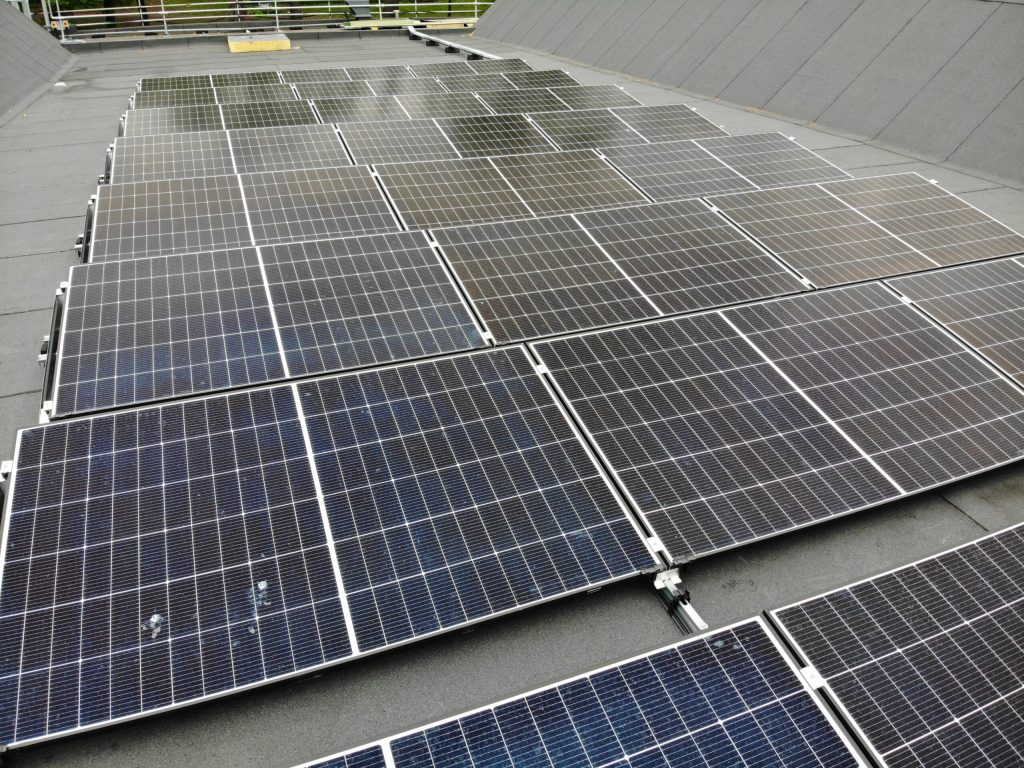
Solar panel installation combines conventional working at height and manual handling risks with an electrical hazard that is genuinely unique to the trade: a photovoltaic panel generates direct current the moment it is exposed to light and cannot simply be switched off in the way other electrical systems can, meaning installers may be working on live components throughout an installation regardless of the state of any isolator downstream. Business Management Systems Limited provides health and safety consultancy built specifically around the realities of solar panel and associated battery storage installation across both domestic and commercial applications.
Why Solar Installation Contractors Need Specialist Support
Solar installation spans domestic rooftop photovoltaic systems, commercial and industrial rooftop arrays, ground-mounted solar farms, solar carports, battery energy storage systems increasingly paired with generation capacity, and solar thermal hot water systems. Each of these applications carries a distinct combination of access, structural, and electrical risks. A generic risk assessment cannot properly address the difference between fitting panels to a domestic pitched roof and constructing a ground-mounted solar farm with associated cabling, fencing, and battery storage infrastructure across an extensive rural site. Our consultancy produces documentation matched to the specific installation type, roof or ground condition, and system scale involved.
DC Electrical Hazards Unique to Solar
Photovoltaic panels generate direct current whenever exposed to daylight, meaning the panels themselves cannot be isolated in the conventional sense, and DC arc faults are particularly dangerous because, unlike alternating current, a DC arc does not naturally extinguish and can sustain itself, generating intense heat capable of causing fire. We help clients develop safe systems of work that reflect this fundamental difference from other electrical trades, including correct sequencing to minimise exposed live conductors during installation, covering panels during connection work to reduce generation, and rigorous quality control of DC connectors and terminations given the serious fire consequences of a poorly made connection.
Working at Height on Domestic and Commercial Roofs
Rooftop solar installation is carried out almost entirely at height, whether on a domestic pitched roof using ladders and roof ladders, or on a large flat commercial roof requiring sustained access across an extensive area. We help clients comply with the Work at Height Regulations 2005, producing risk assessments and safe systems of work matched to the specific roof type and access method involved, including correctly specified scaffold or edge protection for domestic pitched roof work, and appropriate collective fall protection for flat commercial roofs where installation teams may be working across a wide area for extended periods.
Fragile Roofs and Legacy Asbestos on Commercial Installations
Commercial and industrial solar installation frequently takes place on older warehouse and factory roofs that may incorporate fragile roof lights, deteriorated felt coverings, or, in older buildings, asbestos cement roof sheeting, all presenting a serious risk of falling through the roof structure if not properly identified and managed. We help clients identify fragile and asbestos-containing roof materials before installation begins, in line with HSE guidance on fragile roofs and the Control of Asbestos Regulations 2012, ensuring appropriate staging, crawling boards, or roof light protection is in place, and that suspect asbestos materials are managed by competent personnel rather than disturbed during panel or mounting rail fixing.
Roof Structural Loading Assessment
The additional weight of panels, mounting rails, and associated fixings must be properly assessed against the structural capacity of the existing roof, particularly on older commercial and industrial buildings not originally designed with solar loading in mind. We help clients ensure structural assessment is carried out by a competent person before installation, that mounting systems are fixed strictly in accordance with the engineered specification, and that any doubt about existing roof structural capacity is resolved before panels are loaded onto the roof.
Manual Handling and Wind-Catching During Panel Handling
Solar panels are large, moderately heavy, and present a significant surface area that can catch wind during handling, particularly when being carried or positioned at height or on an exposed roof or ground-mounted site. We produce practical manual handling risk assessments in line with the Manual Handling Operations Regulations 1992, addressing safe lifting and carrying technique, team handling for panel positioning, and specific procedures for suspending panel handling work in windy conditions given the particular risk of a panel acting as a sail and pulling an operative off balance.
Battery Storage Systems and Fire Risk
Battery energy storage systems, increasingly installed alongside solar generation in both domestic and commercial applications, carry a recognised fire risk associated with lithium-ion battery technology, including the potential for thermal runaway if cells are damaged, incorrectly installed, or inadequately ventilated. We help clients develop safe systems of work for battery storage installation, including correct ventilation and clearance requirements in line with manufacturer specifications, safe handling procedures that avoid physical damage to battery units, and clear understanding of the fire behaviour specific to lithium-ion systems when advising on installation location and separation distances.
Ground-Mounted Solar Farm Construction
Ground-mounted solar farms introduce groundworks-style risks alongside the electrical hazards common to all solar installation, including foundation or piling work for mounting structures, extensive cable trenching across large rural sites, and coordination of substantial construction activity often in exposed and remote locations. We help clients develop safe systems of work covering excavation and underground service risks consistent with wider groundworks practice, safe plant operation across large sites, and the specific security fencing and perimeter works frequently associated with solar farm construction.
Grid Connection and Interface with Network Operators
Connecting solar installations to the electricity grid requires careful coordination with the relevant distribution network operator and safe working practices where installation work interfaces with existing electrical infrastructure. We support clients in developing safe systems of work in line with the Electricity at Work Regulations 1989, addressing correct isolation procedures for grid connection work, and clear competency boundaries between solar installation work and connection work that may require specific network operator authorisation.
Weather Exposure and Working Conditions
Solar installation is carried out almost entirely outdoors, at height or across exposed ground-mounted sites, exposing installers to sustained weather conditions that affect both comfort and safety, particularly wind conditions given the sail-like characteristics of panels during handling. We help clients build weather-related working criteria into their safe systems of work, including defined wind speed thresholds for panel handling and roof work, and clear guidance on suspending work when conditions present an unacceptable risk.
Working Within CDM Frameworks
Solar contractors working on new build developments or large-scale commercial and ground-mounted projects fall within the scope of the Construction (Design and Management) Regulations 2015. We help clients understand their duties under CDM 2015, prepare risk assessments and method statements to the standard expected by principal contractors, and ensure installation teams working on active construction sites are properly inducted into site-specific rules.
Supporting Your ISO Management System
For solar installation businesses working towards or maintaining ISO 45001, ISO 9001, or ISO 14001 certification, we provide full supporting consultancy, from gap analysis and documentation development through to internal audit and management review support, ensuring your management system genuinely reflects the electrical, structural, and access demands of your work.
Working With BMS
Business Management Systems Limited is a UKAS-accredited ISO management system consultancy with a clear understanding of the DC electrical, structural, and access demands placed on solar panel installation contractors, from domestic rooftop systems to large-scale commercial arrays, battery storage, and ground-mounted solar farms. We produce documentation your teams will genuinely use on site, built around the realities of a trade where the electrical hazard cannot simply be switched off, and where correct fire and structural management matter as much on day one as they do years into the system’s operational life.
If your solar installation business would benefit from health and safety consultancy grounded in the realities of the trade, contact Business Management Systems Limited to discuss how we can support your team.