

M&E Contractors Need Specialist HSE Support.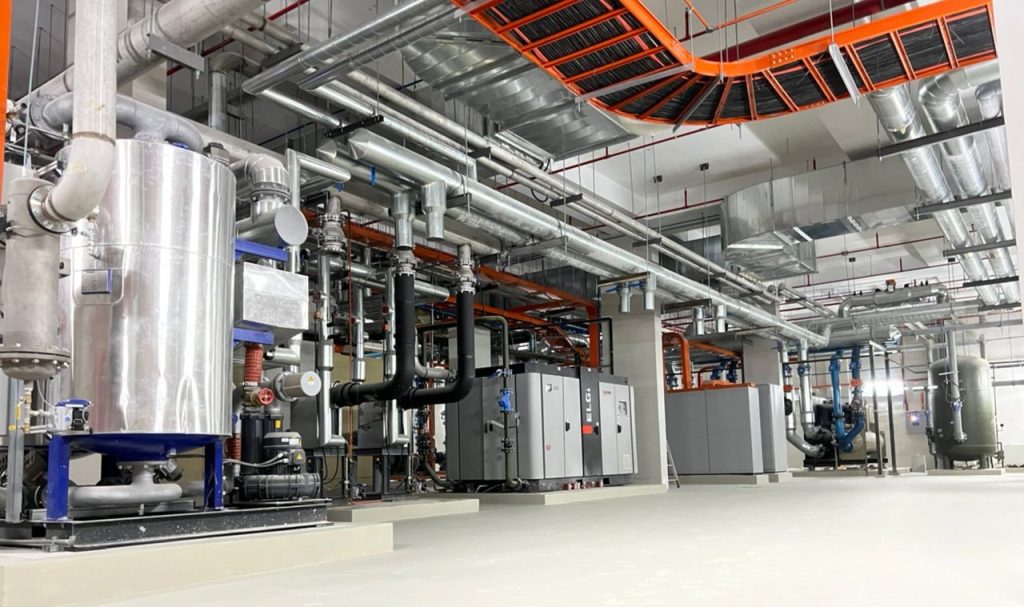
Mechanical and electrical contracting sits at the centre of a building’s operational infrastructure, spanning heating and ventilation, electrical distribution, plumbing and pipework, building management systems, and specialist plant including chillers, generators, and cooling towers. Few trades combine such a wide range of hazards within a single discipline: electrical arc flash risk, confined space entry into ductwork and plant rooms, legacy asbestos lagging on old pipework, legionella risk from water systems, and the manual handling of genuinely heavy plant equipment. Business Management Systems Limited provides health and safety consultancy built specifically around the realities of M&E contracting across all major commercial applications.
Why M&E Contractors Need Specialist Support
M&E work spans heating, ventilation, and air conditioning installation, electrical distribution from low voltage containment through to high voltage switchgear and standby generation, chilled and heating water pipework, building management system controls, ductwork installation, and specialist plant including cooling towers, refrigeration systems, and pressure vessels. Each of these disciplines carries a distinct hazard profile, and M&E projects typically require close coordination between multiple specialist teams working in the same plant room or ceiling void simultaneously. A generic risk assessment cannot properly address the difference between commissioning a rooftop air handling unit and working inside a below-ground plant room on high voltage switchgear. Our consultancy produces documentation matched to the specific M&E discipline, plant type, and building environment involved.
Electrical Distribution and Arc Flash Risk
M&E electrical work extends well beyond final circuit wiring, frequently involving low and high voltage switchgear, distribution boards, generators, and uninterruptible power supply systems, each carrying its own isolation requirements and, in the case of higher voltage or higher fault current systems, a genuine arc flash risk. We support clients in developing safe systems of work in line with the Electricity at Work Regulations 1989, addressing correct safe isolation procedures, arc flash risk assessment and appropriate personal protective equipment selection where higher energy systems are involved, and clear competency boundaries between low voltage installation work and higher voltage switching operations that may require specific authorisation.
Refrigerant Handling and F-Gas Compliance
HVAC and refrigeration systems rely on refrigerant gases that present asphyxiation and, in some cases, toxicity risk if released in confined or poorly ventilated spaces, alongside the pressure hazards associated with refrigerant circuits. We help clients develop safe systems of work for refrigerant handling in line with F-Gas Regulations, including correct recovery and handling procedures, leak detection and ventilation arrangements for plant room work, and ensuring only appropriately certified engineers carry out work on refrigerant-containing systems.
Pressure Systems and Boiler Safety
Boilers, pressure vessels, and associated pipework fall within the scope of the Pressure Systems Safety Regulations 2000, requiring a written scheme of examination and periodic inspection by a competent person. We help clients understand their duties in relation to pressure system safety, ensuring installation and maintenance work is carried out with proper regard to stored energy risks, safe isolation and depressurisation procedures before intervention, and clear documentation supporting the client’s ongoing written scheme of examination obligations.
Asbestos in Legacy Plant and Pipe Lagging
M&E refurbishment and maintenance work in older buildings very frequently encounters legacy asbestos-containing materials, particularly pipe lagging, boiler insulation, and gaskets on ageing plant, making this one of the more serious and recurring asbestos exposure risks across the M&E trades. We support clients in developing rigorous asbestos awareness training and safe systems of work aligned with the Control of Asbestos Regulations 2012, with clear procedures for identifying suspect lagging and insulation before any intervention, since disturbing these materials during plant replacement or pipework alteration presents a serious and entirely avoidable health risk.
Legionella and Water System Safety
Cooling towers, evaporative condensers, and hot and cold water systems present a recognised legionella risk, and M&E contractors working on these systems have a direct role in maintaining effective control. We help clients understand their duties under the Health and Safety Executive’s Approved Code of Practice L8, supporting the development of safe systems of work for cooling tower cleaning and disinfection, water system commissioning, and temperature monitoring regimes, particularly important given the serious public health consequences of inadequately controlled systems.
Confined Spaces in Plant Rooms and Ductwork
M&E work frequently requires entry into confined or restricted spaces, including ductwork, tanks, cooling tower basins, and below-ground plant rooms with limited ventilation. We help clients comply with the Confined Spaces Regulations 1997, producing risk assessments that address atmospheric hazards, safe entry and exit procedures, and emergency arrangements specific to the space and system involved, including particular care where refrigerant or combustion gases could accumulate.
Manual Handling and Lifting of Heavy Plant
Chillers, air handling units, boilers, and generators are substantial pieces of equipment requiring careful lifting plan coordination, often involving cranes or specialist rigging equipment for rooftop or plant room installation. We produce practical manual handling risk assessments in line with the Manual Handling Operations Regulations 1992, alongside lifting plan support for crane-assisted plant installation, addressing safe slinging, exclusion zones, and coordination with other trades during major plant movements.
Working at Height on Rooftop Plant
Rooftop plant installation and maintenance exposes engineers to fall risks at roof edges, alongside wind exposure and weather-related hazards specific to elevated external plant areas. We help clients comply with the Work at Height Regulations 2005, addressing safe roof access arrangements, permanent and temporary edge protection around plant areas, and clear procedures for suspending work in adverse weather conditions.
Hot Works and Fire Risk
Brazing and soldering during pipework installation introduces hot works and fire risks requiring proper control, particularly where work takes place near insulation, ductwork, or other combustible materials within ceiling voids and plant rooms. We help clients develop hot works permit systems, fire watch procedures, and safe storage arrangements for gas cylinders used in brazing operations.
Standby Generators and Fuel Storage
Standby generators introduce diesel fuel storage risks, carbon monoxide exposure from exhaust systems, and noise hazards during testing and operation. We help clients develop safe systems of work for generator installation, commissioning, and routine testing, addressing safe fuel storage and handling, exhaust ventilation to prevent carbon monoxide accumulation, and noise control during test running.
Noise in Plant Rooms
Chillers, generators, and mechanical plant rooms frequently present high ambient noise levels, exposing engineers to noise risk during both installation and subsequent maintenance visits. We produce noise risk assessments in line with the Control of Noise at Work Regulations 2005, including exposure calculations for time spent in plant room environments and recommendations for hearing protection and exposure duration limits.
Commissioning and Working on Live Systems
Commissioning M&E systems frequently requires engineers to work on partially or fully energised electrical and mechanical systems to verify correct operation, introducing risks that differ from straightforward installation work. We help clients develop specific commissioning safe systems of work, addressing controlled energisation procedures, clear roles and communication between commissioning engineers, and safe intervention procedures where faults are identified during live testing.
Working Within CDM Frameworks
M&E contractors typically work as subcontractors within wider construction and fit-out projects, and the multi-trade coordination inherent in M&E work makes effective planning under the Construction (Design and Management) Regulations 2015 particularly important. We help clients understand their duties under CDM 2015, prepare construction phase documentation where required, and produce risk assessments and method statements that properly reflect coordination with other M&E disciplines sharing the same plant rooms and ceiling voids.
Supporting Your ISO Management System
For M&E businesses working towards or maintaining SSIP, ISO 45001, ISO 9001, or ISO 14001 certification, we provide full supporting consultancy, from gap analysis and documentation development through to internal audit and management review support, ensuring your management system genuinely reflects the breadth of mechanical and electrical disciplines your business covers.
Working With BMS
Business Management Systems Limited is a UKAS-accredited ISO management system consultancy with a clear understanding of the technical and compliance demands placed on M&E contractors, from electrical distribution and refrigerant handling to pressure systems, legionella control, and legacy asbestos in plant and pipework. We produce documentation your teams will genuinely use, built around the realities of a trade that touches almost every system a building depends on.
If your M&E business would benefit from health and safety consultancy grounded in the realities of the trade, contact Business Management Systems Limited to discuss how we can support your team.