

Health and Safety Services for Automated Material Handling Systems.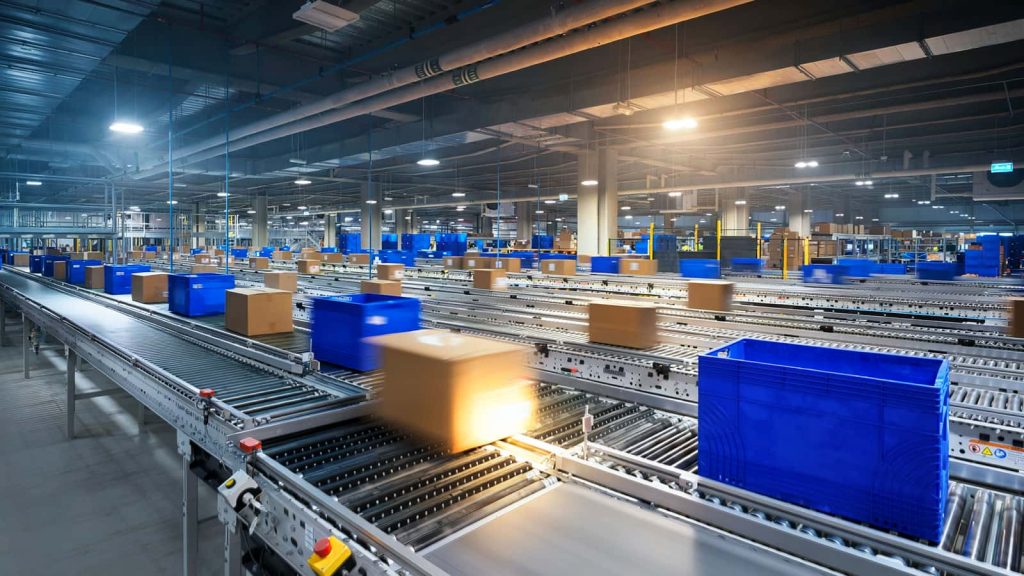
Automated material handling and conveyor systems present a hazard profile that continues well beyond installation, since these systems are designed to move heavy loads under power and, in doing so, create nip points, crush zones, and stored energy risks that have a well-documented history of causing serious injury during both commissioning and subsequent maintenance. Business Management Systems Limited provides health and safety consultancy built specifically around the realities of conveyor and automated material handling system installation across all major commercial applications.
Why Conveyor and Automation Contractors Need Specialist Support
This trade spans belt, roller, and chain conveyors, pallet handling systems, high-speed sortation, automated storage and retrieval systems, robotic palletising and depalletising cells, and automated guided vehicles operating within distribution centres, airports, and manufacturing facilities. Each of these systems carries a distinct combination of mechanical, electrical, and robotic safeguarding requirements. A generic risk assessment cannot properly address the difference between installing a straightforward gravity roller conveyor and commissioning a robotic palletising cell requiring safety-rated interlocking and light curtain protection. Our consultancy produces documentation matched to the specific system type, automation level, and operational environment involved.
Mechanical Entanglement and Crush Hazards
Conveyor systems create nip points, in-running rollers, and crush zones at transfer points, drive units, and tensioning stations, representing one of the most consistently serious mechanical hazards in industrial equipment, with a well-established history of serious entanglement and amputation injury. We help clients comply with the Provision and Use of Work Equipment Regulations 1998, ensuring fixed and interlocked guarding is correctly specified and installed at all identified trap points, and that guarding is never removed or defeated during normal operation, with clear procedures distinguishing routine operation from the specific controlled circumstances under which guards may be temporarily removed for fault finding.
Lockout, Tagout and Stored Energy
Conveyor and automated handling systems frequently retain stored energy even when isolated from their power supply, whether through gravity-fed sections, spring-loaded tensioners, or suspended loads on partially assembled sortation systems, meaning that simply switching off power does not necessarily render a system safe to work on. We help clients develop rigorous lockout and tagout procedures, ensuring all sources of stored energy are identified and controlled before intervention, with individually locked isolation points, clear permit-to-work arrangements for multi-person work, and verification testing to confirm a system is genuinely isolated before work begins.
Commissioning and Fault Finding with Guards Removed
A significant proportion of serious injuries on conveyor and automated handling systems occur during commissioning and fault finding, when guarding may be temporarily removed or bypassed to observe system operation or diagnose a fault, and this remains one of the most serious ongoing risks across the sector. We help clients develop rigorous safe systems of work for guard-removed diagnostic work, including strict speed and power limitation during such operations, exclusion of all non-essential personnel from the area, and clear procedures requiring guards to be fully reinstated and verified before a system returns to normal automatic operation.
Robotic Palletising and Safeguarding Standards
Robotic palletising and depalletising cells introduce safeguarding requirements distinct from conventional conveyor systems, including safety-rated interlocking, light curtains, laser scanning safety zones, and pressure-sensitive safety mats, designed in line with relevant robot safety standards. We help clients ensure robotic cell safeguarding is correctly specified, installed, and verified before handover, including functional testing of all safety devices and clear documentation of the safety-related control system’s performance level, given the serious consequences of an inadequately safeguarded robotic cell.
Electrical Safety and Control Systems
Conveyor and automation systems rely on motor control centres, programmable logic controllers, and extensive control wiring, requiring engineers to work on live systems during commissioning and fault diagnosis. We support clients in developing safe systems of work in line with the Electricity at Work Regulations 1989, addressing correct isolation procedures for maintenance work, safe practice for commissioning work requiring controlled live testing, and clear competency requirements for engineers working on control panels and motor drive systems.
Working at Height on Elevated Conveyor Structures
Conveyor systems frequently include elevated runs, mezzanine-level sections, and overhead cross-over structures, requiring installation and maintenance work at height throughout the system’s footprint. We help clients comply with the Work at Height Regulations 2005, producing risk assessments and safe systems of work matched to the specific structure and access method involved, including permanent access platforms, walkways, and fall protection integrated into the conveyor structure design, alongside temporary access arrangements during installation.
Manual Handling and Lifting of Heavy Components
Conveyor drive units, gearboxes, structural steelwork, and roller assemblies are heavy and often require crane or forklift assistance for positioning during installation. We produce practical manual handling risk assessments in line with the Manual Handling Operations Regulations 1992, alongside lifting plan support for crane-assisted installation of heavier components, addressing safe slinging, exclusion zones, and coordination with other trades during major equipment movements.
Working Within Live Operational Facilities
Conveyor and automation installation and upgrade work frequently takes place within operational distribution centres, airports, and manufacturing facilities that continue to run alongside the installation, requiring careful coordination with existing staff, forklift traffic, and, in some cases, live adjacent conveyor systems that must remain operational during phased works. We help clients develop robust segregation arrangements, including physical barriers around active installation areas, clear communication protocols with facility management, and specific procedures addressing the interface between installation teams and ongoing site operations.
Confined Spaces in Conveyor Pits and Enclosures
Below-floor conveyor sections, transfer pits, and enclosed sortation equipment can present confined space characteristics, particularly where access is restricted and ventilation limited. We help clients assess these spaces under the Confined Spaces Regulations 1997 where applicable, developing safe entry and exit procedures and clear guidance on recognising when a space requires formal confined space controls.
Noise from Motors and Sortation Equipment
Conveyor drive motors, high-speed sortation systems, and associated mechanical equipment can generate significant noise, particularly in large distribution centre installations with multiple systems operating simultaneously. We produce noise risk assessments in line with the Control of Noise at Work Regulations 2005, including exposure calculations for engineers spending extended periods in active conveyor environments and recommendations for hearing protection where required.
Fire Risk and Dust Explosion Considerations
Belt conveyor systems present a recognised fire risk from friction and mechanical failure, particularly in bulk material handling applications, and conveyor systems handling combustible dusts such as grain or other bulk powders may bring the installation within the scope of the Dangerous Substances and Explosive Atmospheres Regulations 2002. We help clients assess fire and, where relevant, dust explosion risk for the specific materials being conveyed, ensuring appropriate detection, suppression, and zoning measures are incorporated into the system design and installation.
Working Within CDM Frameworks
Conveyor and automated material handling contractors working on new build or major facility upgrade projects fall within the scope of the Construction (Design and Management) Regulations 2015 where their work forms part of a wider construction project. We help clients understand their duties under CDM 2015, prepare risk assessments and method statements to the standard expected by principal contractors, and ensure installation teams working within live operational facilities are properly inducted into site-specific rules.
Supporting Your ISO Management System
For conveyor and automation businesses working towards or maintaining ISO 45001, ISO 9001, or ISO 14001 certification, we provide full supporting consultancy, from gap analysis and documentation development through to internal audit and management review support, ensuring your management system genuinely reflects the mechanical, electrical, and robotic safeguarding demands of your work.
Working With BMS
Business Management Systems Limited is a UKAS-accredited ISO management system consultancy with a clear understanding of the mechanical, electrical, and robotic safeguarding demands placed on conveyor and automated material handling contractors, from straightforward roller conveyors to robotic palletising cells and large-scale sortation systems. We produce documentation your engineers will genuinely use, built around the realities of a trade where the consequences of a guarding shortcut or an incomplete isolation are among the most serious in industrial engineering.
If your conveyor or automated material handling business would benefit from health and safety consultancy grounded in the realities of the trade, contact Business Management Systems Limited to discuss how we can support your team.